

There’s something wonderfully strange and hypnotic about Spider-Noir. In an era where superhero stories are obsessed with multiverses, cameos, continuity charts and universe-building, this series dares to do something radically different. It asks a simple but fascinating question: what if Spider-Man existed not inside a glossy modern blockbuster but within a tragic noir novel? The result is one of the boldest and most stylish experiments Marvel television has attempted in years.
Watching Nicolas Cage in Spider-Noir is like watching Humphrey Bogart come to life. The same world-weary expression, the same eyes that have seen and endured too much, the same cynical deadpan humour. Cage had once famously been cast as Superman in a film that never materialised. Looking at him here, one can only conclude that DC’s loss is Marvel’s gain. He makes for a magnificent Spider-Man precisely because he is not a boy discovering his powers but a broken man exhausted by them.
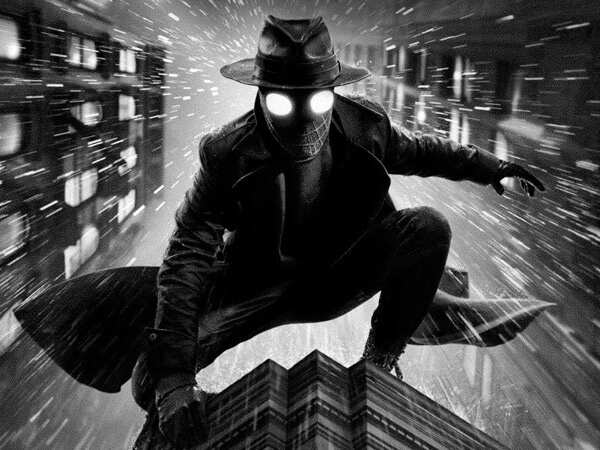
Set in an alternate universe within Sony’s Spider-Man Universe, the series unfolds in a grim Depression-era New York soaked in rain, corruption and despair. Cage plays Ben Reilly rather than Peter Parker, an ageing private investigator who was once the city’s masked vigilante known simply as “The Spider”. Haunted by past failures and drowning in loneliness, Reilly survives as a detective before circumstances drag him back into heroism. Cage wisely avoids trying to make the character conventionally cool. Instead, he plays him as exhausted, unstable, lonely, melodramatic and faintly unhinged. It’s a terrific performance built almost entirely on mood and emotional fatigue.
What makes Spider-Noir such a refreshing experience is that it refuses to behave like a modern superhero show. It is far closer to a smoky detective thriller that accidentally happens to feature Spider-Man. The series draws heavily from Raymond Chandler pulp fiction, German expressionist cinema, classic Warner Bros gangster dramas and the shadowy noir imagery associated with Orson Welles. The storytelling is drenched in cigarette smoke, trench coats, alleyway shadows and existential dread.
The creators released the show in two formats: Authentic Black and White and True-Hue Full Colour. The monochrome version is unquestionably the superior experience. The black-and-white cinematography transforms every frame into graphic novel art. Rain glistens like liquid silver, shadows swallow entire streets and faces appear sculpted out of darkness. The visual design is astonishingly committed to its aesthetic. One can sense filmmakers revelling in the opportunity to merge comic-book mythology with old Hollywood noir traditions.
The action too feels refreshingly old school. The familiar roster of Spider-Man villains appears, but their origins, and indeed Spider-Noir’s own backstory, feel like fever dreams ripped out of pulp magazines. There are echoes of classic superhero mythology throughout. The iconic “With great power comes great responsibility” line appears, though delivered with melancholy rather than inspiration. There’s even a sequence reminiscent of Superman, where a woman falls from a building fully convinced her hero will save her, only this time the moment unfolds in pure noir-Spidey fashion.
Yet beneath the stylised filmmaking lies surprising thematic depth. Spider-Noir is less interested in saving the city than in exploring guilt, urban decay, masculinity, political corruption and class desperation during the Great Depression. The series constantly questions whether heroism even matters in a fundamentally broken world. That emotional and philosophical seriousness gives the show unusual weight.
The supporting performances are equally impressive. Karen Rodriguez is a genuine surprise as Janet Ruiz, Ben Reilly’s sharp-tongued Girl Friday. She brings warmth, wit and emotional intelligence to the series and frequently threatens to steal scenes from Cage himself. Brendan Gleeson, meanwhile, is magnificently dependable as Silvermane. He radiates quiet menace throughout the series, playing the villain less like a comic-book mastermind and more like Al Capone with supervillain henchmen. Gleeson barely raises his voice, yet his presence dominates every frame he occupies.
Perhaps the most admirable thing about Spider-Noir is its complete lack of desperation to connect itself to larger franchises. Right now, it has no obvious multiverse links and wisely avoids pointless cameos. Don’t expect Tom Holland to swing into frame. Instead of asking how this fits into the MCU, the series focuses entirely on tone, character and atmosphere. After years of superhero fatigue, that creative confidence feels almost revolutionary.
Spider-Noir will not work for viewers expecting quippy Marvel spectacle or conventional superhero escapism. It is too melancholy, too stylised and too emotionally bruised for that. But for audiences willing to embrace its strange rhythms and noir sensibilities, the series offers something rare, a superhero story with the soul of a tragic detective film. The series is currently streaming on Amazon Prime Video.
Also Read: Everything We Are Watching This Week: Spider- Noir and More


 By
By