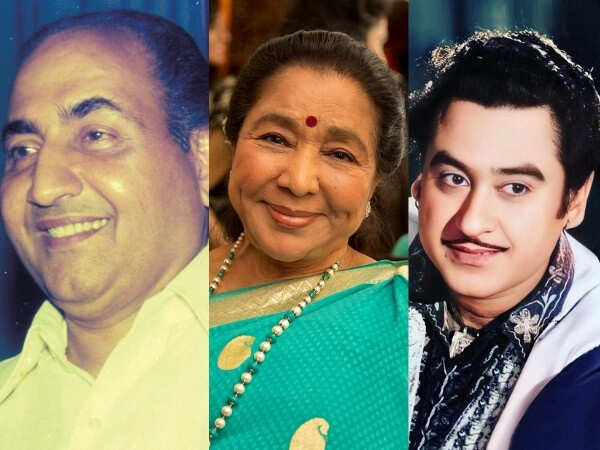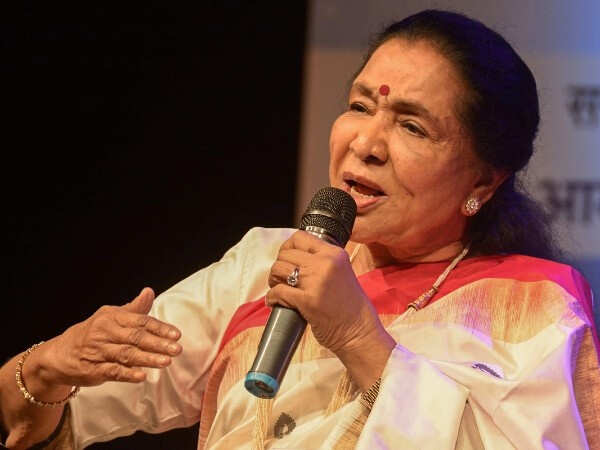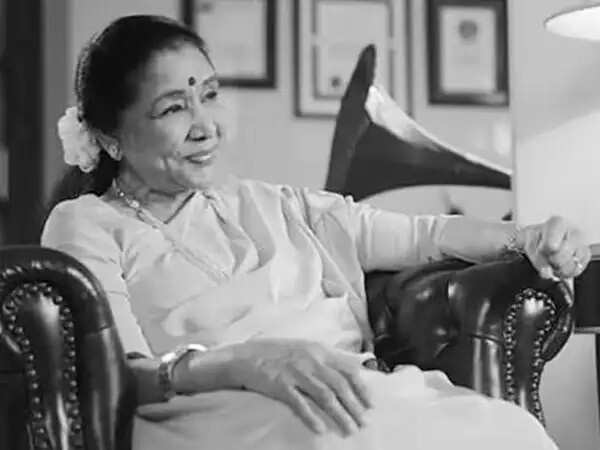
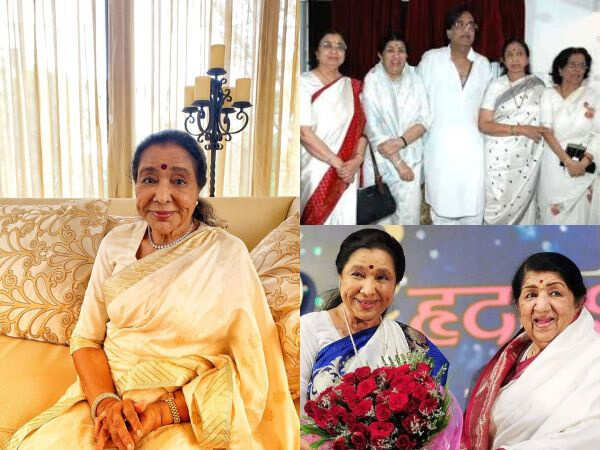


To write about Asha Bhosle is to chronicle not merely the journey of a singer, but the evolution of Indian popular music itself. Across more than eight decades, she has embodied reinvention, resilience, and an almost unparalleled musical curiosity, constantly reshaping her voice to suit changing times, tastes, and textures.

Born on September 8, 1933, in Sangli, Maharashtra, Asha Bhosle grew up in a household steeped in music. Her father, Dinanath Mangeshkar, was a respected classical musician and theatre personality who began training her early. However, her childhood was abruptly disrupted by his death in 1942. At an age when most children are still discovering the world, Asha was compelled to enter it head-on, taking up singing professionally to support her family. This early exposure to hardship would become one of the defining forces behind her tenacity. She sang her first film song, Chala chala nav bala for the Marathi film Majha Bal (1943). The music for the film was composed by Datta Davjekar. She made her Hindi film debut when she sang the song Saawan aaya for Hansraj Behl’s Chunariya (1948), though another film Andhon Ki Duniya was released before Chunariya in the same year, in both films she has sung one trio each. Her first solo Hindi film song was for the movie Raat Ki Rani (1949).
She was also the younger sister of Lata Mangeshkar, a towering figure whose meteoric rise in playback singing cast a long shadow. While Lata quickly became the voice of leading heroines, Asha’s early years in the industry were marked by struggle. Between the late 1940s and mid-1950s, she sang prolifically, often for low-budget films, cabaret sequences, or secondary characters. These were assignments born more out of necessity than choice, as she navigated both financial pressures and a difficult personal life, including an early marriage that ended in separation. Yet, even in these seemingly marginal spaces, she honed a skill that would later define her career: adaptability. There has always been talked of a rivalry between the sisters but publicly at least both always denied it and maintained they were always on cordial terms with each other. When they did sing together, it was magic, as can be seen in songs Man bhawan ke ghar aye (Chori Chori, 1956), Sakhi ri sun bole papihaa us paar (Miss Mary, 1957), O chand jahaan woh jayein (Sharada, 1957), Mere mehboob mein kya nahi (Mere Mehboob, 1963), Unse nazrein mili (Gazal, 1964), Ai kash kisi deewane ko (Aaye Din Bahar Ke, 1966), Jabse laagi toose najariya (Shikar, 1968), Main haseena nazneena koi mujhsa nahi (Baazi, 1968), Main chali main chali (Padosan, 1968), Chhap tilak sab (Main Tulsi Tere Aangan Ki, 1978), and Man kyun behka (Utsav, 1984).

Her earliest songs were composed by A. R. Qureshi, Sajjad Hussain, S. Mohinder, Sardar Malik and Ghulam Mohammed. Her breakthrough came through her collaboration with O. P. Nayyar, a composer who recognised the distinctive texture and rhythm in her voice. Songs like Ude jab jab zulfein teri from Naya Daur (1957) transformed her public image. Under Nayyar’s guidance, Asha shed the limitations of her earlier assignments and emerged as a vibrant, confident playback singer capable of carrying mainstream cinema. Gradually, she established her status and received the patronage of such composers as Sachin Dev Burman and Ravi. This phase marked the beginning of her ascent, but it was only a precursor to a far more revolutionary chapter.
That chapter unfolded with R. D. Burman, the composer with whom she would share both a deeply influential professional partnership and a personal bond through marriage. Together, they redefined the soundscape of Hindi film music. Burman’s experimental compositions, infused with jazz, rock, and global influences, found their perfect interpreter in Asha. Whether it was the sensuous urgency of Piya tu ab to aaja, the psychedelic rebellion of Dum maaro dum, or the breezy romance of Chura liya hai tumne, her voice became synonymous with modernity and bold expression. In an era where playback singing often adhered to established norms, Asha’s willingness to embrace unconventional styles set her apart.
To call her versatile would almost be an understatement. Asha Bhosle’s repertoire spans an extraordinary range of genres: cabaret numbers, romantic ballads, ghazals, classical compositions, folk songs, qawwalis, and later, Indipop and global fusion. Her work in films like Umrao Jaan under Khayyam demonstrated her command over the ghazal form, with songs such as Dil cheez kya hai revealing a depth and restraint far removed from her more flamboyant numbers like Yeh mera dil. Similarly, tracks like Rangeela re, composed by AR Rahman, showcased her ability to adapt to contemporary, youth-oriented soundscapes decades into her career. Each genre she touched seemed to acquire a new dimension, shaped by her instinct for performance.
What distinguishes Asha Bhosle from many of her contemporaries is her remarkable ability to evolve. In the 1990s, when the sound of Hindi cinema underwent a significant transformation, she found renewed relevance through collaborations with composers like A. R. Rahman. Songs from Rangeela (1995), including Tanha tanha and Rangeela re, reintroduced her to a younger audience. Even in the 2000s, she continued to deliver memorable work, such as Radha kaise na jale from Lagaan. At a stage when most artists recede, Asha seemed to rediscover herself.
Her influence extends far beyond Indian cinema. Asha Bhosle has recorded in more than 20 languages and is among the most recorded artists in history, with over 12,000 songs to her credit. She collaborated with international artists, including Boy George, and ensembles like the Kronos Quartet, earning global recognition and even Grammy nominations. In doing so, she became one of the earliest ambassadors of Indian playback singing on the world stage.
Her achievements have been recognised through numerous awards and honours. She received the prestigious Dadasaheb Phalke Award in 2000, followed by the Padma Vibhushan in 2008. She has also won multiple National Film Awards and Filmfare Awards, including the distinction of being among the earliest recipients in the playback singing category. These accolades, while significant, only partially capture her contribution to music.
She has sung extensively in Marathi films as well. Bhosle started her playback singing in Marathi with the mythological film Gokulcha Raja. Since then Bhosle has sung thousands of Marathi film songs. Natya sangeet from Master Deenanath Mangeshkar’s Marathi Sangeet natak has also been recorded in her voice. Some Marathi films in which Bhosle has rendered her voice are: Molkarin, Jait Re Jait, Gharkul, Devbappa, Sangtye Aika, Sinhasan, Samna, Maratha Tituka Melvava, and Nivdung. She has sung extensively in Bengali as well, under the baton of her later husband Rahul Dev Burman and also composers like Salil Chowdhury, Nachiketa Ghosh and Sudin Das Gupta. Apart from Bengali, she has sung in Oriya, Assamese, Bhojpuri, Punjabi, Tamil, Telugu and Malayalam as well.
In the decades following her peak playback years, Asha Bhosle continued to reinvent herself through eclectic collaborations and bold artistic choices. In 1987, she joined forces with Gulzar and R. D. Burman for the landmark album Dil Padosi Hai, and later deepened her classical grounding under Ali Akbar Khan, resulting in a Grammy-nominated recording of traditional compositions. The 1990s saw her experimenting with remixes and Indipop, notably Rahul and I and the award-winning Janam Samjha Karo with Lesle Lewis, even as she briefly turned composer herself with Aap Ki Asha. She also played a key role in encouraging Adnan Sami, later collaborating with him on successful albums like Kabhi To Nazar Milao and Barse Badal. Her enduring love for ghazals found expression in multiple albums and a 2005 tribute to legends such as Mehdi Hassan, Ghulam Ali, Farida Khanum and Jagjit Singh, while numerous compilations celebrated her vast repertoire. From regional projects like Daryachya Deger to experimental ventures such as Asha and Friends, collaborations with artists across fields including Sanjay Dutt, Urmila Matondkar and Brett Lee, and later works like the genre-blending 82, she remained creatively restless well into her later years. Even in the 2010s and beyond, she continued recording special singles and devotional tracks, and in 2020, joined a host of leading Indian artists including S. P. Balasubrahmanyam, Udit Narayan and Sonu Nigam for the collaborative anthem Jayatu Jayatu Bharatam, underscoring her enduring presence in India’s musical landscape.

Beyond singing, Asha Bhosle has also carved out a successful identity as an entrepreneur. Her restaurant chain, Asha’s, with outlets in the United Kingdom and the Middle East, reflects another dimension of her personality, her passion for cooking. Known for personally curating menus, she transformed a personal interest into a global culinary brand.
Her personal life, much like her career, has been marked by both turbulence and deep emotional connections. Her early marriage ended painfully, but her later relationship with R. D. Burman proved to be both creatively and personally fulfilling. Through these experiences, she displayed a resilience that often found expression in her music.
At the heart of Asha Bhosle’s artistry lies a unique philosophy: she approached playback singing as an extension of acting. Rather than merely rendering a tune, she inhabited the character behind it, modulating her voice to suit the personality, situation, and emotional tone of the song. This is why she could convincingly sing for performers as varied as Helen, known for her cabaret numbers, and Rekha, whose performances demanded emotional nuance and classical gravitas. Even in her later years, Asha Bhosle remains a living legend, an artiste whose influence continues to resonate across generations. Her journey is not just one of survival or success, but of constant reinvention. She did not merely adapt to change; she anticipated and shaped it.
The legendary singer passed away on 12 April 2026 in Mumbai at the age of 92. She had been admitted to Breach Candy Hospital with a chest infection and exhaustion, and later succumbed to multi-organ failure. Asha Bhosle stands as a singular figure in music history. Where others specialised, she diversified. Where others adhered to tradition, she experimented. And in doing so, she ensured that her voice would never be confined to a single era, genre, or identity.
ALSO READ: Here’s a playlist of Asha Bhosle’s Filmfare Award winning songs


 By
By