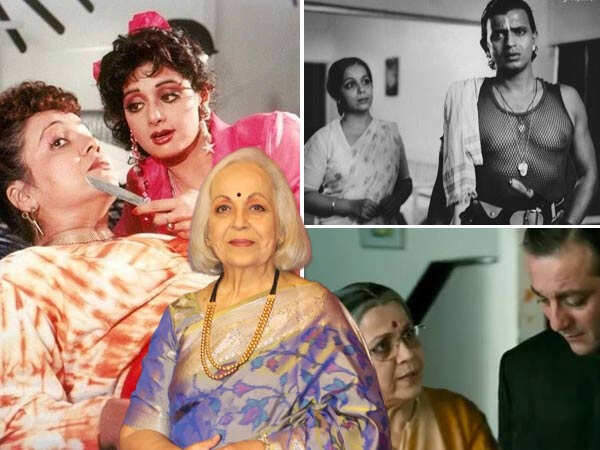


STEALING THE SHOW
Whether she plays Mahatma Gandhi’s wife or Amitabh Bachchan’s mother, Rohini Hattangady holds her own. Farhana Farook shares glimpses of the acclaimed actor’s life and times.
She drew out Kasturba Gandhi from the pages of history and animated her forever in Richard Attenborough’s globally acclaimed biography, Gandhi. The fact that Rohini Hattangady and Kasturba share the same birthdate, 11 April, appears to be a sweet whim of destiny. Not only did Gandhi win the Academy Award for Best Picture, Rohini was honoured with the BAFTA Award for Best Actress in a Supporting Role (1983), being the only Asian so far to win in that category.
That she was ‘boxed’ into elderly roles at 27 was the blowback. In fact, filmmaker James Ivory desisted from casting her in his Heat and Dust when, in person, he found her too young for the role he’d envisioned. Filmmaker Basu Bhattacharya’s dubbing of her as the ‘female Sanjeev Kumar’—someone who could essay older characters with the ease of a veteran—can be counted as a precious recompense.
Mahesh Bhatt, too, has been a cheerleader of Rohini’s ability to meld into a mould. Her Shantabai, the browbeaten maid who wants to empower her daughter in his Arth, won Rohini the Filmfare Supporting Actress Award. Just as in his Saaransh, her Parvati, a grief-devoured mother, is revered for the purity of pathos. Paying a tribute on Rohini’s 70th birthday, Bhatt poetically described her as a ‘tapestry woven with tears and thunder,’ highlighting her spectrum.
In the parallel panorama, Rohini as Mohini in Govind Nihalani’s Party—a woman who negates her identity to appease an egoistic partner—bagged the National Award for Best Supporting Actress. Just as her comic turns in Pankaj Parashar’s Jalwa and ChaalBaaz celebrated her ability to swing in style and sensibility.
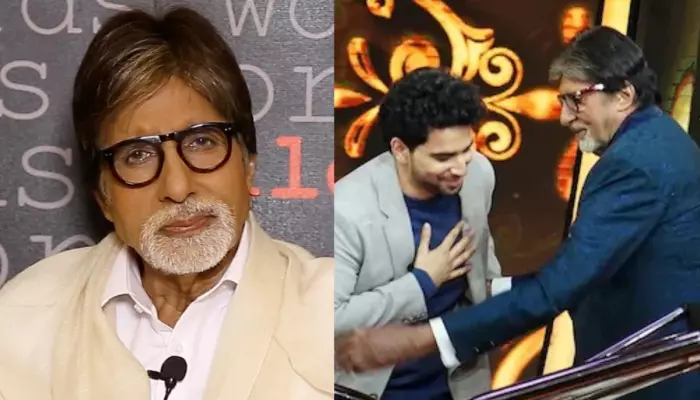
What also remains top-of-mind is her playing the righteous mother, Suhasini, to law-breaker Vijay (Amitabh Bachchan) in Yash Johar’s Agneepath, a role that won her the Filmfare Best Supporting Actress Award yet again. Decades later, during the pandemic, the Mumbai Police posted a meme of an iconic scene from the film where Suhasini asks Vijay to wash his soiled hands before eating, lending humour and relevance to the cult moment.

Rajkumar Hirani’s Munna Bhai M.B.B.S., where Rohini plays the all-embracing mother who endorses the ‘jaadu ki jhappi,’ somewhere decodes the amiable person she is. Her talent thriving in all mediums—theatre, television, regional, and Hindi cinema—her signature dimple defying age and defining charm, septuagenarian Rohini Hattangady cannot imagine life without dreams and drama. Read on in her own words:
YOUNG PERFORMER
The first person to encourage me in the performing arts was my mother (Pratima Oak). Being musically inclined, she enrolled me in sitar and dance classes. My dance guru, Prof. Surendra Wadgaonkar, was a Kathakali exponent. I received training in Kathakali along with Bharatanatyam, Kathak, and Manipuri until my matriculation. Dance helped me acquire grace and overcome stage fright while doing children’s theatre. My father (noted actor and theatre director Anant Oak) directed plays. Once, when he couldn’t find a female actor for one of his dramas, he took me on to play the young girl. In college, I took part in regional theatre and won awards.
STAGE & SCREEN
One day my father came across an advertisement where the central government was offering scholarships in the performing arts. Theatre stalwart Ebrahim Alkazi, whose plays I admired, was the director of the National School of Drama (NSD) and on the selection panel. I was selected and joined the NSD in Delhi in 1971. My biggest takeaway from Alkazi saab was discipline, hard work, and observation—the essentials of being an actor.
At the NSD, I met my future husband, Jayadev Hattangady. Upon graduating in 1974, I was awarded the Best Actress and Best All-rounder awards, while Jayadev won the Best Director award (the duo was referred to as the ‘star couple’ there). Vijay Tendulkar’s Mitra Chi Gosht, IPTA’s Hori (based on Premchand’s Godaan), Ebrahim Alkazi’s Andha Yug, and Jayadev’s Marathi solo-act play Aparajita comprise a few of my notable works in theatre.
The ’70s and ’80s witnessed the ‘parallel wave’ in cinema. Naseeruddin Shah and Om Puri, my seniors at NSD, were part of this movement. While avant-garde filmmakers like Saeed Mirza, Vidhu Vinod Chopra, Sudhir Mishra, and Kundan Shah came from the FTII, Pune, director/playwright Satyadev Dubey and director/cinematographer Govind Nihalani were integral to this movement too. The atmosphere was vibrant. I made my film debut with Saeed Mirza’s Arvind Desai Ki Ajeeb Dastaan (1978) followed by his Albert Pinto Ko Gussa Kyon Ata Hai (1980). Both films won the Filmfare Critics’ Award for Best Movie.
GANDHI’S KASTURBA
Richard Attenborough’s Gandhi (1982), based on the life of the Mahatma (played by Ben Kingsley), had me play his wife, Kasturba. Wives of ‘great’ men often end up dragging behind them. This didn’t happen with Kasturba. Yes, she supported her husband, but there were also differences of opinion.
Gandhiji was harsh towards his sons (Harilal, Manilal, Ramdas, and Devadas). Kasturba disliked the fact that, despite Gandhiji being an advocate, his children never attended school and hence received no formal education. Gandhiji believed that life in the ashram itself would be their education. Because Harilal didn’t receive a formal education, he was denied the chance to go to London. At a tender age, Gandhiji’s second son, Manilal, was given the duty of looking after a sick girl in the Phoenix Ashram in South Africa. He grew close to her. When Gandhiji found out, he punished Manilal and sent him away to Madras. Discipline meant a lot to Gandhiji; he expected the same self-control from others. Kasturba disapproved of her children being put through this.

When Gandhiji and Kasturba left South Africa for India, he asked her to give away all the gifts, including the gold ornaments. Kasturba said she didn’t wear jewellery but she’d like to keep it for her daughters-in-law. Gandhiji put his foot down. Back home, he promoted Khadi. Kasturba said it was difficult to wash Khadi sarees as the fabric turned heavy in water. To that he said, “We will do the washing, you do the draping.”
Travelling to England to receive the BAFTA Award for Best Actress in a Supporting Role (1983) for Kasturba was an experience. The event was ‘live’. There were separate tables allotted to different films. When the nominations for my category were announced, suddenly one camera was focused on me. I felt conscious. The camera followed me right up to the podium as I received the award.

BHATT BONANZA
I was fortunate to have worked with Mahesh Bhatt in Arth (1982), Saaransh (1984), Swayam (1991), and Thikana (1987). Those days I didn’t have a phone. So, Kiran Vairale, who played Shabana Azmi’s friend in Arth, told me that Mahesh wanted to get in touch with me. I also received a message from Shabana asking me not to miss the role. I liked the character of Shantabai, whose only dream is to educate her daughter.
On the first day, I was given a long dialogue sheet written in Awadhi. Shantabai is uneducated, so the complex dialogue seemed out of character. Considering she’s a Maharashtrian, terms like ‘saat phere’ didn’t suit her background. So, I suggested terms like ‘saat janam ki gaanth’ and ‘kumkum’ in place of ‘sindoor’ when Shantabai talks of her abusive husband. Mahesh agreed.

When Mahesh offered me Saaransh (1984), I asked him why he was offering the role of an old woman. But the script was compelling. Saaransh underlines the philosophy that to live, we’ve got to have a purpose. My character, Parvati, is an elderly Maharashtrian woman living with her teacher husband, B.V. Pradhan (Anupam Kher). The couple is grappling with the grief of losing their only son, Ajay. Parvati believes her son will be reborn through their pregnant paying guest, Sujata (Soni Razdan). But Pradhan tries to break this dangerous illusion and sends Sujata away.
The movie ends with Pradhan taking Parvati to see the beautiful flowers that have sprouted in the garden where he’d scattered Ajay’s ashes. Pradhan tells Parvati, “Tumhara anth hai, mera anth hai, lekin jeevan ka anth nahin hai (You and I are mortal, but life is eternal).” The performance got me a Filmfare nomination for Best Actress.

JOINING THE ‘PARTY’
The NFDC-produced and Govind Nihalani-directed Party premiered on television. I play Mohini Barve, an ex-theatre actress who’s in love with playwright Diwakar Barve (Manohar Singh). She has left everything for him, but he’s no longer interested in her. He dismisses Mohini as a mediocre actress. Frustrated, she takes to alcohol. Ravi (Shafi Inamdar), an exuberant theatre actor who’s not taken seriously by the ‘intellectual’ set, is in love with Mohini. As he consoles a mentally disturbed Mohini, two ignored individuals come together. The disregard for her individuality as a woman, which Mohini goes through, still finds relevance. The performance won me the National Film Award for Best Supporting Actress (1985).
LAUGHTER CHALLENGE
Comedy gave a twist to my career. First, Pankaj Parashar approached me for Jalwa (1987) where I played the role of a moll, Sri Baby. He then offered me ChaalBaaz (1989), which was loosely based on Seeta Aur Geeta, where I play Amba Kushwaha, Sridevi’s wicked aunt. He wanted me to flaunt a punk look. It was a challenge because I have a desi face. Also, I have straight hair, which is difficult to curl. So, we tied a high bun and put a hairpiece in front.

In the ‘Jaani yeh chaku hai’ scene, Sridevi’s character had to do an appalling makeup job on me in a bid to humiliate me. To look awful, I painted a tooth black and made one eye seem bigger. But Pankaj wanted something more. Sridevi graciously asked, “Can I try something?” She asked her makeup artist to get an old wig from her van, spiked it with gel, and made me wear it. She added touches to my makeup too. Pankaj loved the crazy look.
THE ‘B’IG MOMENT
With Amitabh Bachchanji, I first did Tinnu Anand’s Shahenshah (1988). I played the mother to him and Supriya Pathak. For the fun song, “O Behna,” filmed on Supriya and Amitji, he was in a comic getup. Commenting on his attire, Amitji light-heartedly remarked, “Look what they’ve made me wear!” I instantly retorted, “Considering what they made you wear in Laawaris (referring to “Mere Angne Mein”), this is better.” I realized my slip of the tongue. I thought to myself, ‘Ab gayi main kaam se.’ I was nervous about what I’d said. After lunch we resumed shooting, but Amitji behaved normally, completed his work, and left. He was so dignified about it.

Years later, I played Amitji’s (Vijay’s) mother (Suhasini Chauhan) in Mukul Anand’s Agneepath (1990). Suhasini doesn’t approve of the path of crime her son has taken. When Vijay returns to his childhood home, there’s a tense dinner table exchange between them. While Vijay is eager to eat the meal she’s prepared, she tells him, “Apne haath dho le (Wash your hands)!” When he does so, she says, “Tere haath itni jaldi nahi dhul sakte Vijay!”—reminding him of the gravity of his misdeeds. The scene remains memorable.
When the death scene was to be shot, Amitji said, ‘Maine iss scene ko thoda sa toda-maroda (redone) hai.’ He explained that since Vijay is dying, he cannot think straight. He can’t utter lines and lines of dialogue. He will talk in phrases, moving randomly from one sentiment or memory to another. I was asked how I’d react. I said the mother is not in a position to speak as well. Her son is dying in her lap. “Mera beta gunda nahi hai!” is the only line I utter. But the pathos is unmistakable.
Between the 1990s and 2000s, Rajkumar Santoshi’s Damini, Ghatak, and Pukar, along with Rajkumar Hirani’s Munna Bhai M.B.B.S., were some of my memorable outings. Recently, I did the Marathi plays Charchaughi and Sundar Mee Honaar, films Baipan Bhari Deva and Ata Thambaycha Naay!, and portrayed Kasturba in the Gujarati web series Kalyanmurti Shrimadji Ni Jivangatha. My last few projects include the Telugu film The Family Star and Aatli Baatmi Futli. While Kisi Ka Bhai Kisi Ki Jaan was my recent Hindi film, upcoming ones include Danger and Katai. Through all phases, my passion for work remains unaltered—something I shared with my late husband, Jayadevji.

ART AND HEART
As I mentioned earlier, Jayadevji and I met at the NSD. There was slight opposition from my family when we wanted to get married. Uncertainty was the major issue, as it’s difficult to survive only on theatre. So we said, “Give us a year, or else I’ll take up a bank job.”
While still at the NSD, Jayadev and I started the Marathi theatre group Awishkar in Mumbai. In 1975, I won the Best Actress Award for my performance in Awishkar’s Changuna (a Marathi adaptation of the Spanish classic Yerma). Eventually, we got married in 1977. Though not fully established, we knew we wouldn’t die hungry.
Jayadevji made his acting debut on stage with Mitti Ki Gadi (1975), directed by M. S. Sathyu and R. M. Singh. He directed over a hundred plays in Hindi and Marathi. His famous plays include Sangun (which received the Maharashtra State Award), as well as Poster, Baki Itihaas, Wara Bhavani Anai Sa, Surya Ke Waris, and Kutte. Jayadevji directed me in several plays including Medea (a Greek tragedy by Euripides), The House of Bernarda Alba, and Aparajita (based on a story by Nitin Sen).
As artists, we didn’t allow ego to come between us. He’d say, ‘As an actor, you’re a face. So you’re popular. But as a director, I am known.’ We never brought work home. We did rehearsals in the auditorium, never at home. Also, as a rule, one of us stayed back if the other was travelling. Jayadevji fell ill in 2007. He was suddenly losing weight. While eating, he’d begin coughing and throw up. He was diagnosed with gastro-esophageal junction (GEJ) cancer. He was optimistic that surgery would help him, but the doctor left the operation theatre saying the disease had spread. Though upset, Jayadevji was prepared to undergo chemotherapy. He even shaved his head in anticipation. He told the doctors, “I am physically, mentally, and financially ready for chemotherapy.” The doctors cited him as an example of optimism. But after the fifth chemotherapy, he stopped taking it. My son, Aseem (Aseem Hattangady has acted in films/series including Barot House, Decoupled, and Scoop), would drive him every day to the college where he taught theatre. He continued doing that for two months. Jayadevji passed away on 5 December 2008, but not before giving his best to what he loved most—theatre! The void remains, but I keep myself busy with work. After all, it was our love for the performing arts that brought us together.
Also Read: Amitabh Bachchan, Yami Gautam, Amit Sadh attend the Sarkar 3 trailer launch


 By
By