

Twenty-Five Years Of Kabhi Khushi Kabhie Gham, And Still Not Over It
Some films you watch. Others move in with you. Kabhi Khushi Kabhie Gham did the latter. Ten-plus watches in, and it still hits the same way for me as it did the first time.
I didn’t grow up with K3G playing on family movie nights. I found it myself, somewhere between a lazy TV rerun and a late-night streaming scroll, and it never really let go after that. I still know every line by heart. I still call myself a Poo on my bad days and my best days. I still get a little emotional when Suraj Hua Maddham plays. This December, K3G turns 25. It feels less like a film anniversary and more like a personal milestone, for a film that isn’t even my age.

The Family Drama That Became Everyone’s Family
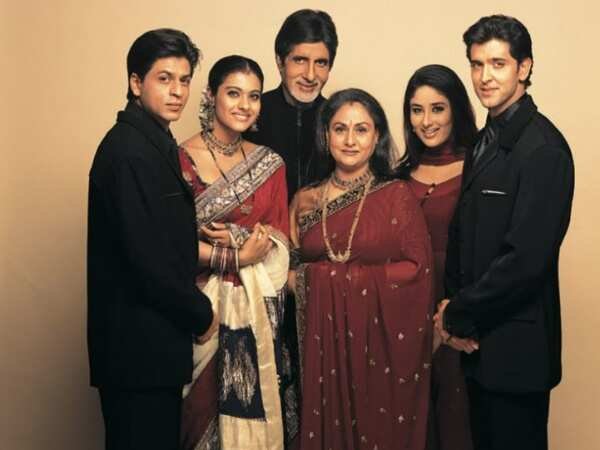
Karan Johar’s 2001 magnum opus was always going to be big. Amitabh and Jaya Bachchan as the Raichand patriarch and matriarch. Shah Rukh Khan and Kajol as Rahul and Anjali. Hrithik Roshan as Rohan. And a fresh-faced Kareena Kapoor Khan as Pooja, the girl the world would come to know simply as Poo. Add Rani Mukerji, Jibraan Khan, Farida Jalal and a soundtrack that still owns every DJ’s wedding playlist. You call it a star cast; I call it an event.
Inspired by Yash Chopra’s Kabhi Kabhie and drawing its core plot from the Bengali film Tumi Je Aamar, K3G wasn’t hiding its ambition. Three hours and 30 minutes long and made on a budget of Rs. 40 crores, it went on to earn Rs. 136 crores worldwide, becoming one of the highest-grossing Indian films of its time.
Big canvas, bigger emotions and, somehow, room for every single person watching to find themselves in it, including a viewer who wasn’t even born when Yash Raichand first walked into that hospital room.
Why It Became A Cult Classic
Every generation needs one film that gets quoted at family dinners, prom nights, breakups and group chats, often all in the same week. Kabhi Khushi Kabhie Gham is that film. It gave audiences a joint-family saga that felt operatic and personal at once. A father disowning a son for marrying outside their class. A mother who never stops mourning the son she lost to pride.
A little brother growing up with one mission: bring the family back together. It’s melodrama, sure. But it’s melodrama that means something, because everyone has a version of “kabhi kabhi aisa kyu hota hai ki apne paraye ho jaate hain” tucked somewhere in their own family history.

That silence between Yash and Rahul, the kind that lasts years instead of one hard conversation, feels a little different watching it now than it must have to audiences in 2001. My generation doesn’t really do the silent-treatment estrangement thing. We argue over text, we vent to group chats, we say too much instead of too little. The gap has just moved. It doesn’t sit in unspoken years anymore, it sits in read receipts and left-on-read stories. But watching Yash Raichand hold onto his pride for that long still stings, because some things about parents and children clearly don’t change even when the medium does.
And then there’s Yash Raichand’s line to Rahul, delivered with all the finality Amitabh Bachchan can summon: “Keh diya na… bas keh diya!” No further explanation needed, then or now. It’s become shorthand for every stubborn parent, every immovable decision, every argument that ends with someone refusing to budge.
That’s what a cult classic does. It gives you language for feelings you didn’t know how to phrase.
Why It’s Such A Pop Culture Force
K3G didn’t just release. It colonised pop culture and stayed there. Bole Chudiyan became the blueprint for every Indian sangeet that followed: families in matching festive fits, dancing together, a tradition that’s still going strong two decades later.
Rahul’s monologue to Rohan, the one that starts with “Zindagi mein agar kuch banna ho, kuch haasil karna ho, kuch jeetna ho”, has been recited at graduations, pep talks and in Instagram captions more times than anyone can count. Kajol’s Anjali brought sharp Delhi wit into a Raichand household that badly needed it.And somewhere in London, a college girl in a crop top and a scarf changed what Bollywood thought main-character energy could look like.

I’d like to think I was already a Bollywood buff before this film found me. But the glam, the songs, the larger-than-life scenes, the drama, the sheer emotional excess of it all, that’s what cemented it. K3G didn’t convert me. It confirmed everything I already loved about Hindi cinema and then turned the volume up.
Poo, Every It-Girl’s Personality Trait
Let’s talk about Pooja Sharma. Manish Malhotra dressed her in shimmer crop tops, leather pants, miniskirts and enough scarves to start a boutique, and somehow made all of it feel iconic.
Her blush-pink sequined top, her fiery red look in You Are My Sonia, the sharara in Bole Chudiyan, every single outfit became a mood board. But it was never just the clothes. It was the audacity. The sass. The full-body confidence of a girl checking herself out in the mirror and saying, out loud to no one, “Tumhara koi haq nahi banta ki tum itni sundar lago. Not fair.”

Vanity? More like personality. Poo doesn’t apologise for taking up space, for having main-character energy before that was even a phrase, or for turning “kaun hai yeh jisne dobara mudke mujhe nahi dekha” into a genuine worldview.
Somewhere between rewatch four and rewatch ten, her confidence stopped being a character trait on screen and started becoming a borrowed personality trait. The eye roll, the entitlement to being adored, the refusal to shrink. All stolen happily from a girl in a crop top on a London campus in 2001.
Twenty-Five Years Later
There’s a reason this film refuses to age. It’s not the runtime, and it’s not the drama, though there’s plenty of both. It’s that Kabhi Khushi Kabhie Gham understood something true about families, about love, about the specific ache of estrangement and the relief of reunion, and wrapped it all in the glossiest, most quotable, most rewatchable package Bollywood has ever produced.
A quarter of a century later, it still plays like a warm hug, a fashion show and a group therapy session, all at once. If it ever gets a proper theatrical re-release for the anniversary, I will drop everything I’m doing. Some films deserve to be watched on the biggest screen possible, surrounded by strangers who know every word too.
Here’s to a film that gave me dialogues I still quote, a fashion icon I still copy, and a personality trait I will defend till the end of the world.
Keh diya na. Bas, keh diya.ya na. Bas, keh diya.


 By
By




 By
By