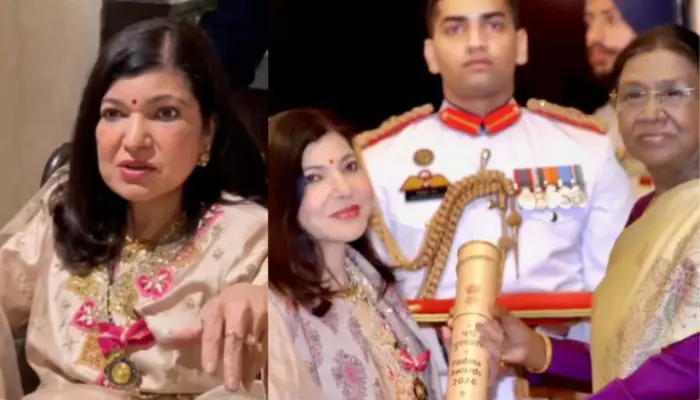
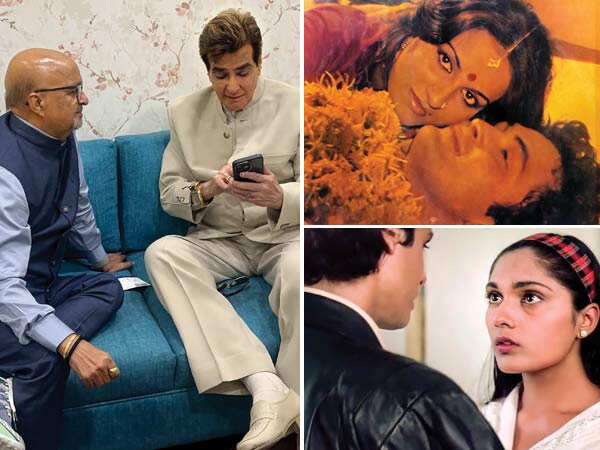


For someone holding the Guinness World Record for writing the most number of songs, having penned over 4,000 for more than 650 films over three decades… Sameer Lalji Pandey popularly and professionally known as Sameer Anjaan, is incredibly unassuming. It’s the same simplicity, the same minimalism with which his lyrics convey the intricacies of love and loss, hope and happiness. Son of renowned lyricist Anjaan, Sameer hit a high note with the sellout album of Aashiqui in the early ’90s. Front-lining the musical renaissance brought about by composer duo Nadeem-Shravan and founder of T-Series the late Gulshan Kumar, Sameer became the sought after bard of Bollywood. He won three Filmfare Awards for Best Lyricist in close succession. The award clinchers Nazar ke saamne (Aashiqui), Teri umeed tera intezar (Deewana) and Ghunghat ki aad se (Hum Hain Rahi Pyar Ke) flaunted the glossary he popularised. Sanam, jigar, jaanam, jaan-e-jigar, saajan… the Hindi/Urdu words became the lexicon of love even as he aced party numbers (Ole ole from Yeh Dillagi) and family anthems (the title track of Kabhi Khushi Kabhie Gham). Apart from Nadeem-Shravan, his collaborations with Anu Malik (Baazigar), Himesh Reshammiya (Tere Naam), Anand-Milind (Beta), Jatin-Lalit (Kuch Kuch Hota Hai) are the toast of reality shows, remixes and reels. His recent Hum aapke bina from Salman Khan’s Sikandar composed by Pritam only shows his relevance in every genre, in every generation. Here Sameer shares the special memories behind some of his hit songs. Read on in the lyricist’s own words:
Nazar Ke Saamne (Aashiqui, 1990)

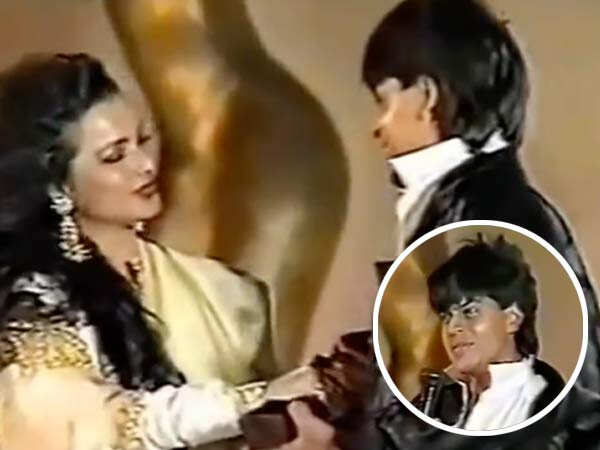
Though Mahesh Bhatt’s Aashiqui is regarded as my career’s biggest hit, Aamir Khan’s Dil released earlier the same year did well too. However, I tasted true success with Aashiqui. Nazar ke saamne won me the Filmfare Award for Best Lyrics. My life’s biggest dream was that whenever I receive a Filmfare Award, it should be from my father, the legendary Anjaan saab. So when my name as the winner was announced and I went on stage, I requested that my father, who was sitting in the audience, present the award to me. Those days Dad was recovering from a paralytic stroke and found it difficult to move on his own. But on hearing that he had to present the award to me, he was energised. He walked up to the stage on his own. His speech was unforgettable where he mentioned, “The Black Lady was my dream though I never received it. It’s not that I didn’t deserve it… But perhaps it wasn’t in my destiny… My second journey starts today through my son Sameer. Whatever I did not get, I’ll receive through him.” On hearing that I broke down. Even winning an Oscar wouldn’t have meant so much or given me so much satisfaction.
Teri Umeed Tera Intezaar Karte hai (Deewana, 1992)
Lawrence D’Souza’s Saajan (1991) was a musical hit. Nadeem-Shravan won the Filmfare Award for Best Music Album while Kumar Sanu won the Best Playback Singer (Male) for Mera dil bhi kitna pagal hai. I was nominated but I didn’t receive the award for Best Lyrics. In 1992, I was nominated once again for Teri umeed tera intezar (Deewana), while Majrooh Sultanpuri saab was nominated for Woh Sikander hi doston from Jo Jeeta Wohi Sikandar. When Majrooh saab’s name was mentioned amongst the nominees, he thought he was announced as the winner. He began walking towards the stage. The next moment it was declared ‘the award goes to Sameer’. It was such an awkward situation. I didn’t want to go on the stage. I’ve admired two lyricists in my life – Majrooh saab and Anand Bakshi saab. I consider them my gurus. So as a mark of respect for him, I requested Majrooh saab to present me my second Filmfare Award. I’m lucky he did. The whole scenario changed after that moment. Majrooh saab was so gracious that he hosted a dinner for me that night. Later, Sunil Dutt saab wrote a letter to me saying, “You’ve proved you’re Anjaan saab’s son.”
Ghoonghat Ki Aad Se (Hum Hain Rahi Pyar Ke, 1993)
In 1993, I received the Best Lyrics Award for Ghoonghat ki aad se in Mahesh Bhatt’s Hum Hain Rahi Pyar Ke, while music directors Nadeem-Shravan didn’t. Choli ke peeche kya hai (Khalnayak) written by Anand Bakshi saab was extremely popular and was nominated too. So Bhatt saab humorously remarked, “Ghoonghat ne ‘choli’ ko chupa liya.” During the award ceremony, Bakshi saab was sitting on one side and Gulzar saab on the other. That evening I’d worn a suit. Noticing that Bakshi saab remarked, “You’ll take the award tonight.” I replied, “Sir, how can I take the award when you’re here.” He said, “I’ll feel proud if you do.” And he did. They were such gracious people.

Aake Teri Baahon Mein (Vansh, 1992)
Vansh was directed by action-director Pappu Verma. I’ve always been fascinated by raag Puriya dhanashree. Laxmikant-Pyarelal had composed the song, Meri saanson ko jo mehka rahi hai written by my father, for Badaltey Rishtey (1978) on this raag. I requested Anand-Milind to create a tune on the same raag for Vansh. They came up with the deeply romantic Aake teri baahon mein. I wondered how it would be filmed. But Pappu Verma assured me saying, “I promise I’ll shoot it the way you’ve written it.” Truly, the song, rendered by the late Lata Mangeshkarji and S. P. Balasubrahmanyamji, appears like a painting on celluloid. The film may not have done well. But the song remains an all-time favourite. It was much loved by Lataji too.
Mujhe Raat Din (Sangharsh, 1999)
A year ago, I happened to hear the song, Mujhe raat din being played on the radio. They announced that the music was by Jatin-Lalit, my close friends. They didn’t mention the lyricist’s name. I believed the song was well-written. I called Lalit and complimented them for the beautiful composition and asked who’d written it. Lalit said, “Please stop joking! You’ve written it!” I recollected that indeed I’d written it and all the memories of the recording came rushing back. It’s also one of my best romantic songs. Sonu Nigam has sung it with emotion. It features amongst his top numbers.

Dulhe Ka Sehra (Dhadkan, 2000)
Music director Nadeem was a great fan of late Sufi singer Nusrat Fateh Ali Khan saab. He requested Khan saab to sing a special composition for Dharmesh Darshan’s Dhadkan. At first Khan saab wasn’t keen as he only sang his own compositions. But when Nadeem insisted and said he was Khan saab’s biggest fan he agreed. As requested, Nadeem arranged a seated recording session for him. Khan saab began the recording around 9 pm. He kept giving retakes upon retakes… late into the night. The line Main teri baahon ke jhoole mein pali babul… made him break down each time he attempted to sing it. On seeing him get so emotional Nadeem said, ‘Khan saab let’s do it tomorrow.” He retorted, “Nadeem, if it happens today, it will… or never. Because I’m in that ‘fever’, that state of mind, you’ll get the right emotions.” Finally, the take was ‘okayed’. He later revealed that the above mentioned line reminded him of his daughter. The song was also to be filmed on him but before that he passed away. It was then filmed on Kader Khan. Uncannily, even the audiences got teary-eyed on the same line. That’s the hallmark of a true artiste. Incidentally, this is the only song Nusrat saab sang for a composer/lyricist in India.

Tere Naam (2003)
I began my journey with Himesh Reshammiya with Satish Kaushik’s love tragedy Tere Naam. Before Tere Naam, I’d met Himesh twice. I held some kind of ‘dislike’ for him. I believed he had an attitude. Initially, when I got to know that Himesh would be giving the music, I refused to take up the film. But Satish was insistent. He said since it’s a love story, he couldn’t do without me. During that time I was to fly to London for the music sitting of Vikram Bhatt’s Raaz (2002) as Nadeem was there. Next morning Satish called me again saying if I didn’t write the lyrics, he’d opt out of the film. I relented. Satish asked me to send him two lines of a bhajan, which he’d shoot as the mahurat shot. He said after I returned from London, we’d do music sitting with Himesh and if I liked him we’d work together or quit. On these terms, I sent him the lines of the bhajan Mann basiya… On my return a music sitting was arranged. On seeing me Himesh touched my feet and said, “Sir, I’m your huge fan. Your lyrics and Nadeem-Shravan’s compositions have inspired me.” I realised I’d a wrong image of him. He was so humble. And a workaholic. Being an intense love story, it wasn’t an easy film. Initially, no one was ready to buy the music rights of the film. I requested Bhushan Kumar (T-Series) to acquire it. “You’ll be the happiest person. I assure you it will be the biggest hit of the year!” I said. Bhushan said, “If that proves true, I’ll give you a bonus apart from what the producer will give you.” The music created history. Bhushan fulfilled his promise. During Tere Naam, Salman Khan reportedly was undergoing heartbreak. I guess that’s why he accepted this subject. He felt it was his own story. Whenever he listened to Kyon kisi ko wafa ke badle wafa nahi milti… he’d cry. He believed it had been written for him. Before going on the set, he’d play the song. Then he’d get into a mood, a trance and shoot.
Dhoom Machale (Dhoom, 2004)
Producer Aditya Chopra said the actioner Dhoom would be a challenging assignment for me as I’d largely written romantic songs. He said he’d acknowledge my talent if I could give him hit lyrics for this film. When I visited Aditya’s office for the narration, I saw music director Pritam there. He said that Adi hadn’t liked a tune he’d composed though he loved it. He asked me to listen to it and convince Adi. They played the tune and I loved it. I conveyed that to Adi. The opening lines had the word ‘Laila’, which Adi found old-fashioned. I asked for a day to redo the lines. I added the word ‘Dhoom machale’ instead as filmmakers like a ‘title’ song. I completed the mukhda and shared it with Pritam, who hummed it for Adi the next day. He got energised on hearing it. That’s how my journey with Yash Raj Films began. The song Dhoom machale is part of every Dhoom sequel, every generation.

Char Baj Gaye (F.A.L.T.U., 2011)
Young composers Sachin Sanghvi and Jigar Saraiya made a promising team. I sensed that when they were working with Pritam. I asked them to create some tunes, which we could play for producers. I requested director Remo D’Souza and producer Vashu Bhagnaniji to hear the new music composers play for their upcoming project F.A.L.T.U. In the first sitting itself, Sachin-Jigar cracked three songs including Fully faltu…aaltu jalaltu and Char baj gaye lekin party abhi baaki hai. Those days the dialogue, ‘Picture abhi baaki hai mere dost’ from Shah Rukh’s Om Shanti Om (2007) was a hit. So I adapted it into ‘party abhi baaki hai’! The album offers a good mix including the romantic track (Le ja tu mujhe) and the inspiring Awaaz. It established my versatility. People remarked that I was changing with time as I’d taken to writing party numbers. Undeniably, an artiste has to adapt to move ahead.
Also Read: Lyricist Sameer Anjaan Shares His Thoughts About Asha Bhosle

 By
By