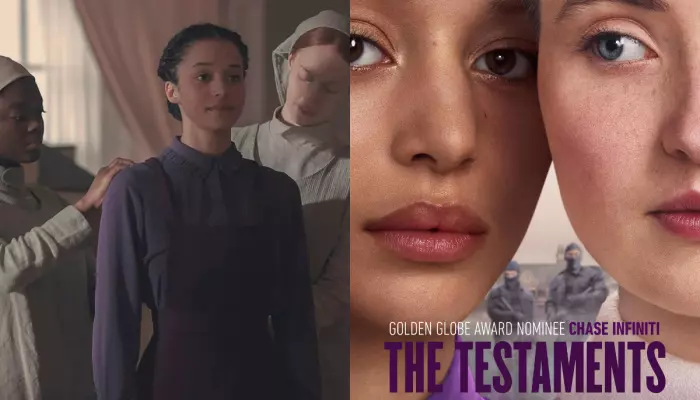

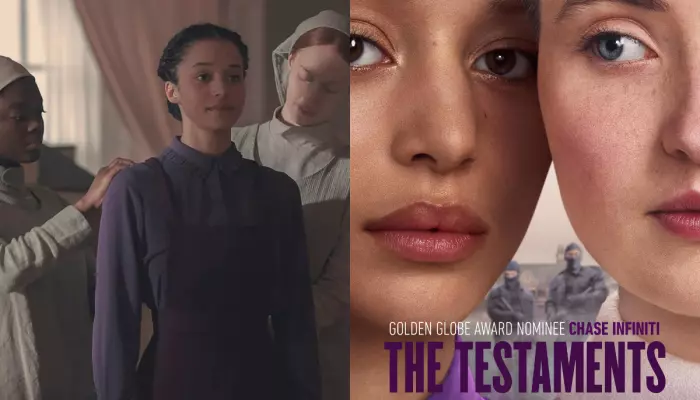
The Testaments is a sequel series to The Handmaid’s Tale. However, it has its own share of struggles, as it stumbles to stand on its own. Despite the introduction of new characters and perspectives, it remains deeply tied to the original story, which further makes it difficult for viewers to appreciate the series as a standalone. The show offers some fresh elements.
At its core, The Testaments blends familiar dystopian ideas with a coming-of-age story about young girls growing up in an oppressive society. While it features some strong performances with impeccable moments of emotional depth and catharsis, it often feels weighed down by constant references to the earlier series. As a result, it becomes a show that is engaging in parts but rarely surprising or innovative.
The Testaments has a fresh idea with looming shadows of its past
One of the biggest challenges for The Testaments was its heavy reliance on The Handmaid’s Tale. The series begins with an explanation of its setting: a totalitarian regime called ‘Gilead’. However, it appears that viewers need prior knowledge to fully understand the severity of the situation. Much of the tension feels more connected to past events, making it hard for new viewers to grasp what’s at stake. However, for returning viewers, The Testaments can feel repetitive. The show revisits similar characters, themes, and conflicts, lacking the freshness of a new perspective.

 By
By