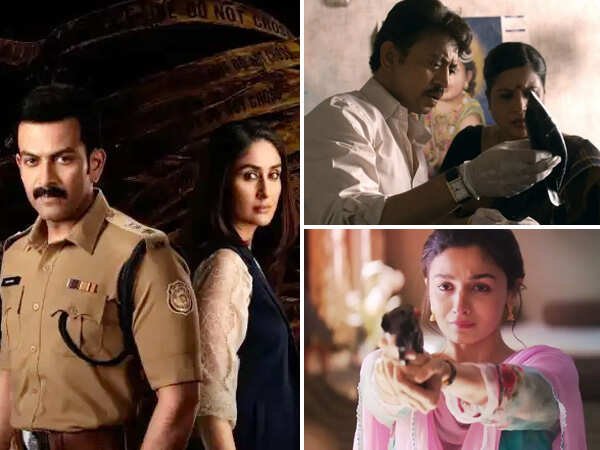


What makes a character stay with you? It could be their courage, their flaws, their vulnerability, or the choices they make when pushed to their limits. For the National Award-winning filmmaker Meghna Gulzar, characters have always been more than just people who move a story forward. They are shaped by human emotions, personal conflicts and the circumstances they find themselves in.
Across Raazi, Talvar, Chhapaak, Sam Bahadur and now Daayra, Meghna has repeatedly stepped away from familiar character templates to create people who feel layered, lived-in and deeply human. Her characters can be brave without being fearless, powerful without being invincible, and vulnerable without being weak. It is this emotional complexity that gives her stories their own voice.
So, when Meghna puts pen to paper, audiences can expect characters that embody a different shade of human emotion. Here’s a look at the characters through which the filmmaker broke the mould every time.
Sehmat Khan & Iqbal Syed – Alia Bhatt & Vicky Kaushal (Raazi)

With Raazi, Meghna Gulzar took the familiar spy story and placed an unlikely woman at its centre. Sehmat Khan, played by Alia Bhatt, is not introduced as a trained agent or an action hero. She is a young woman thrust into an extraordinary situation and forced to find her way through it. That vulnerability is crucial to the character. Meghna doesn’t erase Sehmat’s fear to make her appear brave. Instead, her fear exists alongside her sense of duty, making her choices feel all the more human. The same thoughtfulness extends to Iqbal Syed, played by Vicky Kaushal. He isn’t merely the man on the other side of Sehmat’s mission. He is her husband, someone who trusts and cares for her which makes the emotional stakes of her mission far more complicated. The characters are therefore not simply “spy” and “husband”. Their relationship becomes the emotional heart of the story, allowing Meghna to explore patriotism through personal sacrifice rather than national duty alone.
Shonali Bose & Ashwin Kumar – Konkona Sen Sharma & Irrfan Khan (Talvar)

In Talvar, Meghna Gulzar broke another familiar mould: that of the crime investigator who arrives with all the answers. The film is built around a case where conflicting accounts and competing theories make the truth difficult to establish, and its characters are written to reflect that uncertainty. Irrfan Khan’s Ashwin Kumar is intelligent and instinctive, but he is not presented as an all-knowing detective. His understanding of the investigation is shaped by the evidence available to him and his own interpretation of it. Konkona Sen Sharma’s Shonali Bose, meanwhile, exists within the same world of uncertainty, adding another perspective to a case that refuses to settle into one definitive narrative. This is what makes the character writing in Talvar so considered. Meghna doesn’t use her characters to tell audiences what to believe. Instead, she gives different people different perspectives, allowing their assumptions, instincts and interpretations to become part of the story. The characters don’t simply investigate the mystery, they become a reflection of just how difficult it can be to arrive at the truth.
Silloo Manekshaw & Sam Manekshaw – Sanya Malhotra & Vicky Kaushal (Sam Bahadur)

Biopics about national heroes can easily turn their central characters into larger-than-life figures defined almost entirely by their achievements. With Sam Bahadur, Meghna Gulzar chose to look beyond the uniform. Vicky Kaushal’s Sam Manekshaw is certainly portrayed as a formidable military leader, but the writing also pays attention to his personality, wit, relationships and vulnerabilities. The man is as important as the legend. Silloo Manekshaw, played by Sanya Malhotra, becomes an important part of revealing that side of him. Their relationship takes Sam outside the military world and allows audiences to see the person behind the public figure. The thought behind these characters lies in that contrast. Sam’s greatness is not communicated solely through battles, medals or military achievements. It is also reflected in the way he interacts with people and the life he leads beyond his professional identity. Meghna makes the historical figure feel human without diminishing his stature.
Malti – Deepika Padukone (Chhapaak)

With Chhapaak, Meghna Gulzar challenged one of the most limiting ways such stories are often told: by defining a woman entirely by what happened to her. Malti, played by Deepika Padukone, is an acid attack survivor, but that is not where her character begins or ends. The film follows her journey through survival, recovery, relationships, anger, hope and the process of reclaiming her identity. What makes the character so thoughtfully written is the space Meghna gives her beyond her trauma. Malti isn’t presented as an inspirational figure at every moment. She is allowed to experience difficult emotions, moments of vulnerability and retain her own individuality. By doing so, Meghna shifts the focus from the incident to the person who has to live beyond it. Malti becomes a character first and a symbol of an issue second. Across these films, Meghna Gulzar’s characters may inhabit completely different worlds, but they share a common thread: they are never as simple as the archetypes they initially appear to be. A cop becomes a study in competing ideas of justice. A spy becomes a young woman grappling with fear and sacrifice. An investigator becomes part of a larger question about truth. A military legend becomes the man behind the uniform. And a survivor is allowed to exist beyond her trauma. That is perhaps where Meghna Gulzar consistently breaks the mould by taking characters audiences think they recognise and giving them enough depth, contradiction and emotional truth to make them something entirely their own.
DCP Ajooni Kohli & DCP Raman Kumar – Kareena Kapoor Khan & Prithviraj Sukumaran (Daayra)

With Daayra, Meghna Gulzar brings two police officers to the centre of a morally complex story, but neither is written as the “right” or “wrong” cop. DCP Ajooni Kohli, played by Kareena Kapoor Khan, believes in the law and due process, while DCP Raman Kumar, played by Prithviraj Sukumaran, represents a far more uncompromising idea of justice. What makes these characters interesting is that their conflict stems from their beliefs rather than a straightforward hero-versus-villain dynamic. Both are responding to the same horrific crime, but their understanding of what justice demands is fundamentally different. Meghna uses this contrast to create characters driven by conviction. Ajooni’s adherence to the law is not merely a professional trait, just as Raman’s approach is not simply about aggression.
Their choices are shaped by how they understand justice itself. By placing two equally committed characters on opposing sides of the same question, Daayra creates a conflict where there is no easy answer. Produced by Junglee Pictures and Dr. Jayantilal Gada (Pen Studios), it is distributed by Pen Marudhar. Inspired by true events, Daayra releases in cinemas on 18th September.
Also Read: Is India Losing Faith in Justice System? 5 Unflinching Moments From Meghna Gulzar’s Daayra Trailer

 By
By


 By
By