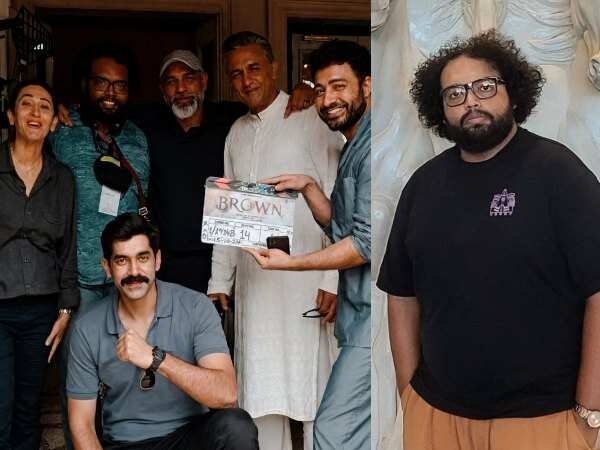
For writer Mayukh Ghosh, Karisma Kapoor’s Brown is the latest chapter in a career that has moved across crime, drama and character-driven stories for film and streaming. Ghosh, whose credits include Hostages and Kitto Ka Kissa, has also worked with filmmaker Sudhir Mishra before taking on Brown as its writer. The series, directed by Abhinay Deo and based on Abheek Barua’s novel City of Death, brings together several ideas that have increasingly shaped Ghosh’s storytelling: flawed characters, complicated emotional worlds and stories that look beyond the surface of a crime.
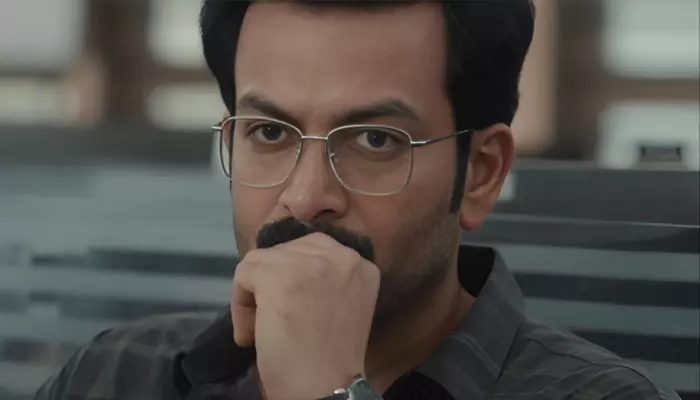
At the centre of Brown is Rita Brown, an alcoholic former police officer battling her own demons while investigating a murder in Kolkata. But for Ghosh, the attraction was never simply the mystery surrounding the crime. It was the person at its centre. Rita is damaged, self-destructive and far removed from the conventional image of a female protagonist. That contradiction is something Ghosh finds compelling.
“The archetype of the ideal has ruled cinema for quite long. The ideal is slightly more than a statue or sculpture, which has some human-like movements, but emotions are a part of human nature. Whenever we show someone as damaged, we are also telling the audience that they are closer to you. They are not further away, outside of the window waving with a happy ending. They are people who are like you, and they have some things which affect them, but they are still living their lives and trying to show up for what they are meant to do.”

That was particularly important when adapting Rita for the screen. While the adaptation changed her ethnicity from Bengali to Anglo-Indian, Ghosh says there was never any question of changing the essence of the character. “We don’t see this character day in and day out in Indian cinema. We don’t see a star like Karisma Kapoor portraying such a character coming from a mainstream background. It’s not the characteristics of her being damaged or alcoholic that are taking her away from the audience; it is also what is taking her to the audience, making them feel empathetic and one with her. They also understand the tough journey she is on, and the road ahead is filled with thorns one can’t see but feel within.”
Ghosh also knew very early that Karisma Kapoor had understood exactly who Rita was. At a table read, he happened to see Kapoor before she entered the room. It wasn’t a performance, but something as simple as the way she walked that convinced him. “I saw her walk past me, and right before entering the room, she tied up her hair. From a distance, I understood that was Rita Brown. Because she was not walking as Karisma Kapoor, a film star. She was walking as this trained police woman. And as soon as we started the table read, she started reading her scene with her mother, played by Soni Razdan, and it became apparent that not only had she worked on the physicality of the character but also the tone, the nuance of being an Anglo-Indian.”
For Ghosh, that willingness to move beyond familiar templates also extends to the crime genre itself. With OTT audiences having consumed an enormous amount of crime content, he believes that simply hiding the identity of a killer is no longer enough to sustain a story. “The world of OTT creates a certain format where thriller is a given hypothesis. Any genre, be it sports drama, family, romance or crime, has to be a thriller as well because of the format itself. Any film would engage the audience for two hours, whereas OTT gives us 300 to 400 minutes to engage. This gives rise to the idea of suspense, and in suspense, it is never about the who or what. It is always about why and how. And that’s where the real game is.”
That became a guiding principle for Brown. For Ghosh, the murder was only the starting point, not the destination. “This genre nowadays is not about that incident or event. It is a much deeper character study; it is a sociological study. It is much beyond this. This was also my viewpoint while doing Brown, that this should never be about who did the killing. It should more be about the why and the how. That is the exploration you see in the writing of Brown.”

The same thinking extended to Kolkata, a city Ghosh knows intimately. The series is based on City of Death, whose story is set in Kolkata, but retaining the city also allowed Ghosh to move away from the familiar cinematic representation of it. “It’s the city I come from. But Kolkata is not only a city of Bengalis. While adapting the book, we never really wanted to change the city because it provided me with a unique combination of an opportunity and a challenge. It’s the city I come from, so there was the opportunity to take a fresh look at the city. Kolkata is not only a city of Bengalis. Many communities live in the city, and that’s what I wanted to explore. I wanted to look at the city through a new lens, which is why I changed the protagonist from a Bengali to an Anglo-Indian. Then we brought in the other communities and places, such as the Biharis, the business community of Marwaris, Jains and Chinatown. I could bring in an eclectic, cosmopolitan portrayal for the story.”
That also meant stripping away what Ghosh sees as the romanticised version of Kolkata that cinema repeatedly returns to. “There is romanticisation of Kolkata, from the Howrah Bridge, Maidan and trams to the red-and-white sarees, Durga Puja and the idea that Nari Shakti is the centrepiece of the culture. All these are romanticised and, in reality, are false. Kolkata has a high crime rate. It has lost its past glory. The city is suffering from heavy migration and extreme economic conditions. Many businesses have left the city; there is unemployment, and the youth have nothing to look forward to. All these conditions have also created a situation for crime to thrive.”
“All these things also came up in my research when I was talking to people who are still living there and trying to understand their qualms about the place. This portrayal is the fresh look we wanted to bring in. That is why you see dark, gritty, rain-soaked, dingy alleys, dirty homes, huge houses but broken families. The idea of this Kolkata comes from this sort of research and perspective.”
But Brown itself had a long and uncertain journey before it reached audiences. Ghosh began working on the project while still in his late twenties, at a time when he hoped it would transform his career. Instead, the series spent years in limbo before finally reaching viewers. “When I started working on it, I was still in my late 20s and hoping that the project would turn my life around. My life did turn around, but the project was still where it was. There was uncertainty and a lack of trust. The world only believes in you when they see the work. So there is only so much I can talk about a project where no one knows about it.”
The delay, however, ended up pushing Ghosh to look beyond crime writing. He began exploring a coming-of-age series, moved towards direction and started developing other projects, including his first feature. “What the delay did for me was that not only did I believe in myself more, but I also started pivoting to other things. I came out of the crime genre. I wrote a coming-of-age series and pivoted to direction. I am slated to make my first film, which is an inspirational start-up tale. I also got attached to another OTT project, which is a sports drama. All these wouldn’t have happened if Brown wasn’t delayed. I wouldn’t have pivoted and looked around for work everywhere else had this delay not happened. I truly wouldn’t have understood what other things I am capable of and would have been comfortable in the space I am in.”
His favourite compliment from the entire experience of working on Brown came from Kapoor, and it was considerably less serious. During one scene, Ghosh was standing in for another actor while Kapoor was performing. His acting made her laugh, forcing them to stop and reset. “She said, ‘You are a superlative writer and going to be a good director, but spare us your acting.’ I don’t think I have got a better compliment and lesson than that.”




 By
By



 By
By